
IPTV vs Streaming Services: What’s the Difference?
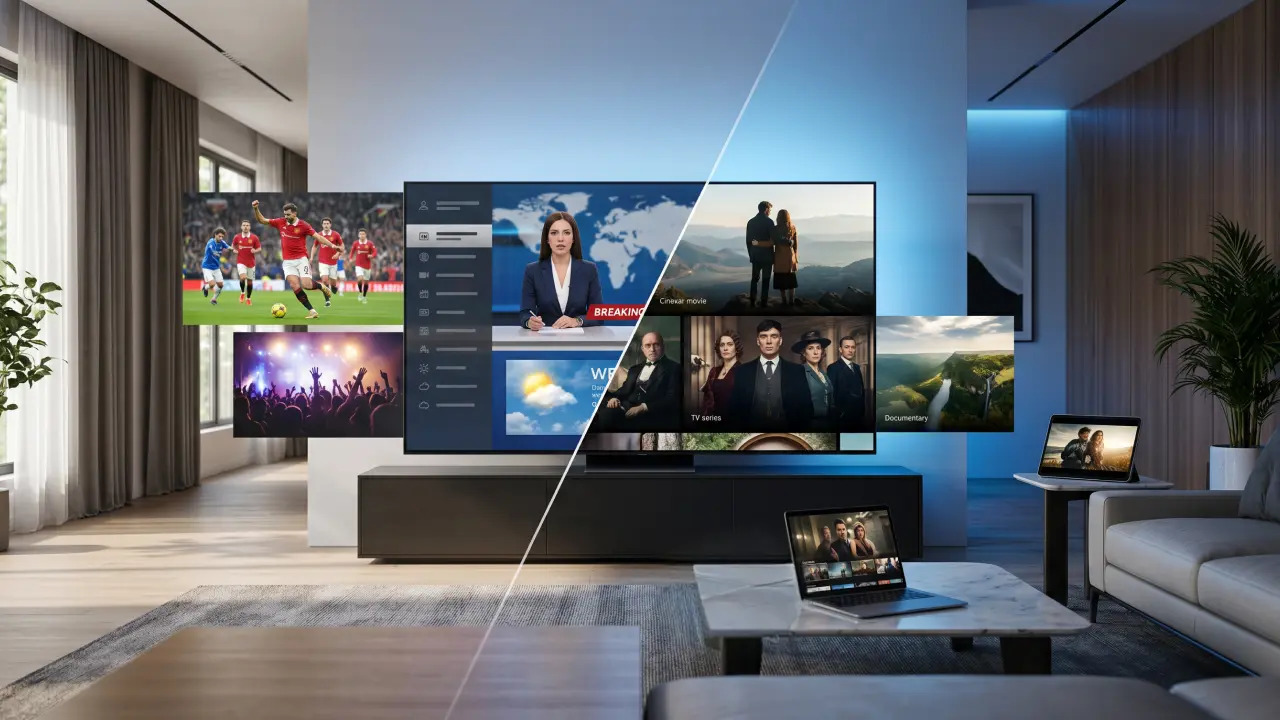
The way we watch video content has changed dramatically in the digital age. Two major players dominate how people access TV and video today: IPTV and streaming services. Although both rely on internet technology, they are fundamentally different in how content is delivered, how viewers access it, and what kinds of experiences they’re best suited for. Knowing these differences can help consumers, businesses, and service providers make smarter choices about which option fits their needs.
What IPTV Really Means
IPTV (Internet Protocol Television) delivers television content over internet networks, but unlike traditional broadcast methods like cable or satellite, it typically runs within a managed and controlled environment. IPTV services are often provided by telecom companies, ISPs, or specialized operators, and access is limited to users with a subscription.
With IPTV you get both live television channels and video-on-demand (VOD) content — all delivered in a way that blends the familiarity of traditional TV with the flexibility of modern internet-based technologies. What’s more, many IPTV systems use multicast streaming, where a single stream is sent to many users at once, making bandwidth use more efficient during live broadcasts.
How Streaming Services Work
Streaming services like Netflix, Amazon Prime Video, and Hulu are part of the over-the-top (OTT) category. These platforms deliver content directly over the public internet, bypassing traditional broadcast infrastructure entirely.
Streaming platforms are built for flexibility and convenience. Their content is stored on cloud servers and can be watched on almost any connected device — smartphones, tablets, smart TVs, gaming consoles, and more. Users typically choose from a huge library of movies, series, and shows whenever they want, often with subscription plans or ad-supported options.
Related products
Key Differences Between IPTV and Streaming Services
Although both IPTV and streaming services use internet protocols to deliver media, several important distinctions set them apart:
1. Delivery Infrastructure
IPTV runs over a private, provider-controlled network, which tends to deliver stable performance and predictable quality, especially for live TV. Streaming services use public content delivery networks (CDNs), which allow global access but can sometimes fluctuate in quality depending on internet conditions.
2. Live vs. On-Demand Focus
IPTV excels at real-time broadcasting, offering live channels in ways that resemble traditional TV. Video-on-demand is an added feature. Streaming services, on the other hand, are built around on-demand viewing, putting flexibility and choice at the forefront — though many now also offer live streams for events like sports.
3. Bandwidth and Efficiency
Because IPTV often uses multicast streaming, it can be more bandwidth-efficient for large live broadcasts. Streaming services deliver each viewer their own individual stream (unicast), which gives more personalization but uses more data at scale.
4. Customization & Audience
IPTV services are frequently tailored for enterprise and institutional use — for example in hotels, hospitals, or corporate environments — with features like content scheduling and user access control. Streaming platforms, by contrast, are designed with individual consumers in mind, offering personalized recommendations, user profiles, and broad device support.
Pros and Cons: Which Is Better?
Both IPTV and streaming have advantages and limitations depending on how and where they’re used:
IPTV Advantages
- Reliable, low-latency delivery, especially for live TV.
- Better content control and security through private networks.
- Structured services ideal for business and hospitality environments.
IPTV Limitations
- Less flexibility for global access.
- Usually tied to a specific IP network or provider region.
- Streaming Service Advantages
- Vast libraries with flexible access on many devices.
- Often cost-effective with multiple subscription and ad-supported options.
- Easy for individual users to adopt without special equipment.
Streaming Service Limitations
- Video quality can vary with internet speed.
- Each viewer uses separate bandwidth, which can be less efficient for big live events.
- Real-World Use Cases
For businesses and hospitality, IPTV is often the better choice because of its controlled delivery, reliable performance, and customization capabilities. For everyday consumers who value on-demand access to movies, series, and personalized recommendations on multiple devices, streaming services are typically the more attractive option.
The Future: Convergence Is Coming
The line between IPTV and streaming services is becoming less distinct. Hybrid platforms — like YouTube TV or Hulu + Live TV — combine live channels with on-demand libraries, offering the best of both worlds. Advancements in technologies like 5G networks and edge computing promise even smoother delivery and broader experiences across both formats. Ultimately, IPTV and streaming services are evolving together, expanding how and where we consume video content.